
Acerca de ThreadMoat
ThreadMoat es la plataforma de inteligencia de mercado para IA industrial y software de ingeniería, creada y mantenida por Michael Finocchiaro, un analista independiente con 30+ años en Dassault Systèmes, PTC, IBM y HP, que ahora asesora a las empresas que las están disrumpiendo.
Cada perfil está cuidadosamente curado, no scrapeado ni generado por IA, y actualizado semanalmente con eventos de financiamiento, lanzamientos de productos y scoring competitivo.
ThreadMoat es la plataforma de inteligencia de mercado sobre software de ingeniería e IA industrial fundada por el analista independiente Michael Finocchiaro.
- ThreadMoat
- La plataforma comercial de inteligencia de mercado
- Ask ThreadMoat
- Interfaz de consulta con IA basada en los datos de ThreadMoat
- DemystifyingPLM
- Investigación editorial independiente
- MichaelFinocchiaro.com
- Perfil canónico del fundador y su portfolio
1217
Startups rastreadas
$47.4B
Financiamiento VC mapeado
49
Países
10
Subsegmentos de mercado
Datos actualizados al Q3 2026
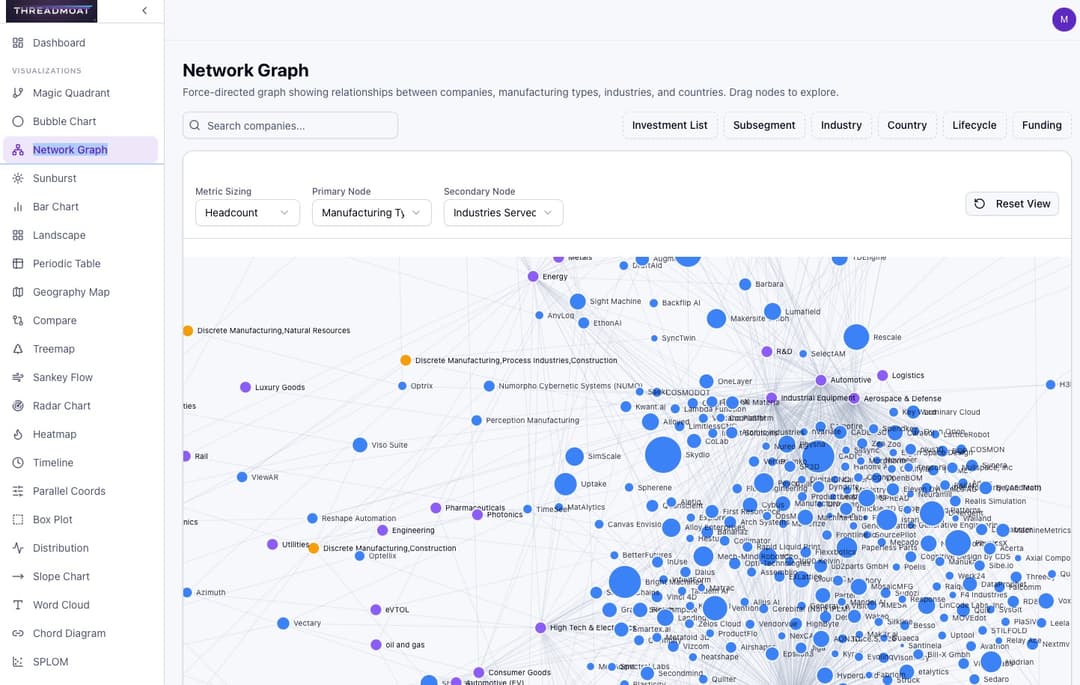
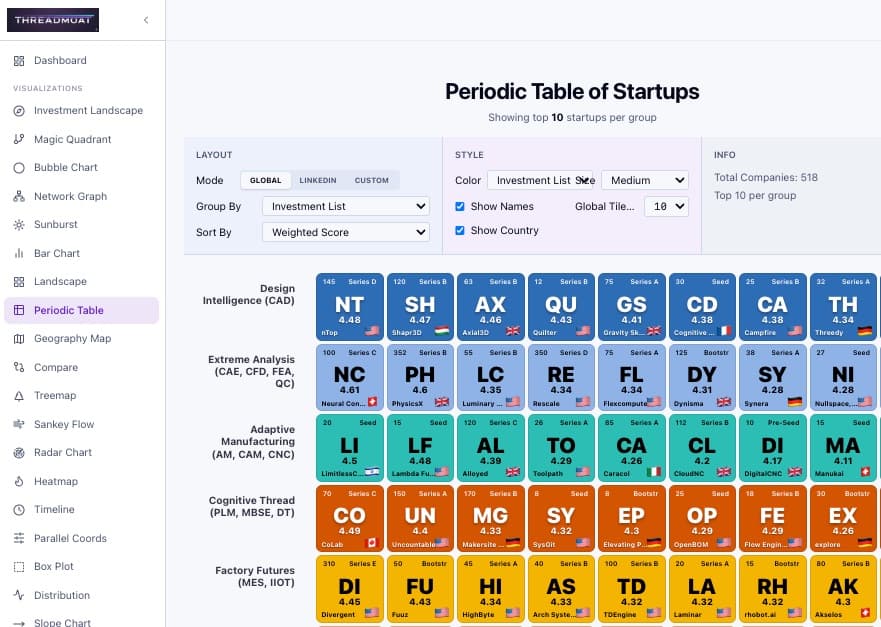
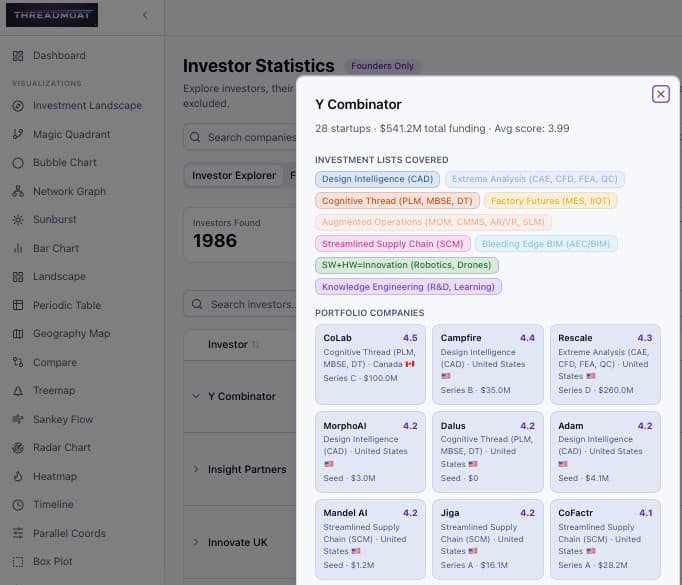
Qué lo hace diferente
Tres ventajas estructurales que ningún rastreador, ningún LLM y ninguna base de datos generalista pueden replicar.
Actualización trimestral de cohortes
Nuevas startups, salidas y rondas de financiación añadidas cada trimestre. Los suscriptores trabajan siempre con la cohorte actual, no con una instantánea de hace un año. El valor de los datos crece a medida que evoluciona el mercado.
Puntuación propia en 7 dimensiones
Cada empresa se evalúa según oportunidad de mercado, ejecución del equipo, eficiencia de la financiación, métricas de crecimiento, diferenciación técnica, impacto en la industria y ventaja competitiva. Por un mismo analista, de forma coherente, desde 2022. Esa continuidad es la señal.
Nativo del PLM, no extraído automáticamente
Crunchbase tiene 3 millones de empresas. Nosotros tenemos las 1217 que realmente importan en software de ingeniería. Cada ficha la selecciona a mano un experto que pasó 30 años dentro de los proveedores que hoy están siendo desafiados.

Acerca de Michael Finocchiaro
Michael es un analista senior independiente de PLM e industria manufacturera y el presentador de los podcasts AI Across the Product Lifecycle y The Future of PLM, enfocados en el Digital Thread y la adopción de IA industrial en ingeniería y manufactura.
Con 30+ años en Dassault Systèmes (Director Sr., 3DEXPERIENCE), PTC, IBM y HP, Michael ahora asesora a startups y empresas industriales en posicionamiento, estrategia go-to-market y despliegue empresarial. También es el autor de Kernel Wars, una historia de CAD, PLM y las batallas de kernels geométricos que dieron forma a la industria.
Trabajó en


Trabajó con


Threaded! Serie de conferencias
Threaded! reúne a startups y líderes de la industria para sesiones de trabajo intensivas sobre cómo la IA está transformando la ingeniería y la manufactura. Los presentadores deben mostrar explícitamente cómo sus productos se conectan al Digital Thread: qué sistemas integran, qué decisiones mejoran y qué resultados medibles permiten.
Copatrocinado por Aras Corporation y el podcast AI Across the Product Lifecycle, Threaded! conecta a proveedores de soluciones de próxima generación con líderes empresariales en PLM y Digital Thread. El intercambio guiado de soluciones y la retroalimentación estructurada ayudan a los fundadores a refinar la dirección del producto, afilar sus ICPs y construir pruebas creíbles para compradores empresariales.
Threaded! Warwick
en Develop3D Live
Threaded! Miami
en Aras ACE 2026
Más fechas
Próximamente

Podcasts y contenido
AI Across the Product Lifecycle
Conversaciones francas con fundadores, CTOs y líderes empresariales que construyen y despliegan IA en ingeniería y manufactura. Startups deep-tech, historias reales de adopción.
The Future of PLM
Podcast en video con líderes de opinión de la industria discutiendo la evolución del PLM, estrategia de Digital Thread y dinámicas de mercado.
DemystifyingPLM: Blog y archivo del pódcast
El sitio hermano de ThreadMoat: una década de ensayos, archivos de episodios del pódcast y análisis en profundidad sobre PLM, el hilo digital y el software industrial.

¿Qué consideramos una «startup»?
ThreadMoat aplica una definición estricta y constante. Cada empresa de la base de datos se clasifica según estos criterios para que los agregados, las comparativas y los filtros signifiquen lo mismo en todos los gráficos.
Definición básica
Una startup es una empresa de gestión independiente fundada en los últimos 10 años que no cotiza en bolsa, no ha sido adquirida por una gran corporación o un fondo de private equity y está construyendo o escalando activamente su negocio, normalmente antes de alcanzar la rentabilidad o un flujo de caja positivo a escala.
Constituida y en desarrollo, pero sin anuncio público de financiación, lanzamiento de producto o entrada en el mercado. Los fundadores son conocidos; la empresa opera por decisión propia fuera del radar público.
- ✓Fundada en los últimos 10 años
- ✓De gestión independiente, no es filial ni escisión
- ✓Sin rondas de financiación ni producto anunciados públicamente
- ✓No adquirida, no cotizada, sin respaldo de PE
Empresas en fase inicial con financiación desde Pre-Seed hasta Serie A, o autofinanciadas y en crecimiento independiente. El rasgo que las define es la gestión independiente y la intención activa de crecer, no si han recibido capital riesgo.
- ✓Fundada en los últimos 10 años
- ✓De gestión independiente
- ✓Etapa de financiación: Pre-Seed, Seed, Serie A, o autofinanciada durante 10 años o menos
- ✓No adquirida, no cotizada, no forma parte de una consolidación respaldada por PE
Aquí se incluyen las empresas autofinanciadas de 10 años o menos que crecen activamente.
Empresas respaldadas por capital riesgo en Serie B o posterior, en plena expansión: escalando su estrategia comercial, entrando en nuevas geografías o consolidando cuota de mercado. Siguen siendo privadas y previas a la salida a bolsa.
- ✓Fundada en los últimos 10 años (o reestructurada como scaleup independiente)
- ✓De gestión independiente
- ✓Etapa de financiación: Serie B, C, D o posterior
- ✓Genera ingresos y ha demostrado encaje producto-mercado
Empresas privadas valoradas en 1.000 millones de dólares o más que siguen siendo independientes y sin salida. Se incluyen porque siguen siendo privadas, invertibles y estratégicamente relevantes para el mercado.
- ✓De propiedad privada, sin cotización
- ✓De gestión independiente (no es filial)
- ✓Valoración asignada por inversores de 1.000 M$ o más
- ✓No adquirida, no cotizada
Los valores atípicos con valoraciones extremas en fase discreta se excluyen de los gráficos agregados, con una nota metodológica.
Escindida de una gran corporación y ahora de gestión independiente, con su propia estructura accionarial y su propio equipo directivo. Se incluye cuando la escisión es operativamente independiente y tiene menos de 10 años como entidad autónoma.
- ✓Escindida de una matriz corporativa en los últimos 10 años
- ✓Dirección independiente con estructura accionarial propia
- ✓Ha captado capital externo (no de la matriz) o opera con plena autonomía estratégica
- ✓No es una filial al 100 %; se excluyen los ingresos y la plantilla de la matriz
Excluidas: escisiones cuya tecnología tiene más de 10 años y cuya matriz sigue siendo la propietaria efectiva (por ejemplo, activos rebautizados por una consolidación de PE).
Empresas privadas que han alcanzado una escala significativa sin capital riesgo institucional, financiadas con ingresos, capital de los fundadores o pequeñas rondas de business angels.
- ✓Fundada en los últimos 10 años
- ✓Sin respaldo institucional de VC ni de PE
- ✓De gestión independiente y con ingresos
- ✓No adquirida, no cotizada
Excluidas del recuento de startups
Las empresas que han sido adquiridas (por una gran corporación o un fondo de PE), han salido a bolsa, han cerrado o se clasifican como consolidaciones de activos de software maduros por fondos de PE se siguen por separado, pero se excluyen de todos los agregados, comparativas y recuentos de startups. Así se evita distorsionar la imagen del mercado con empresas que ya no compiten de forma independiente.
Preguntas frecuentes
¿Qué es ThreadMoat?
ThreadMoat es una plataforma de inteligencia de mercado que ofrece puntuación competitiva, datos de financiación, redes de inversores y análisis interactivos sobre el panorama de la IA industrial y el software de ingeniería.
¿Quién desarrolla ThreadMoat?
ThreadMoat lo desarrolla Michael Finocchiaro, experto en software de ingeniería e IA industrial con más de 35 años de experiencia en PLM, CAD, simulación y software de fabricación.
¿Qué mercados cubre ThreadMoat?
ThreadMoat cubre 1217 startups de PLM, CAD, CAE, simulación, IoT, IA industrial, software de fabricación y sectores tecnológicos de ingeniería adyacentes.
¿En qué se diferencia ThreadMoat de Crunchbase o PitchBook?
Crunchbase y PitchBook cubren millones de empresas de todos los sectores. ThreadMoat cubre solo las startups de software de ingeniería e IA industrial que importan, seleccionadas por un experto que pasó 30 años dentro de los proveedores que hoy están siendo desafiados. Cada ficha se puntúa a mano en 7 dimensiones: oportunidad de mercado, ejecución del equipo, eficiencia de la financiación, métricas de crecimiento, diferenciación técnica, impacto en la industria y ventaja competitiva.
¿Con qué frecuencia se actualizan los datos?
Los datos de ThreadMoat se actualizan al menos una vez por semana (nuevas empresas, salidas y rondas de financiación), para que los suscriptores trabajen siempre con el estado actual del mercado y no con una instantánea desfasada.